Firstborn of the Dead
Author: litmag_admin
-

Six Poems – Jared Beloff
after Pablo Neruda’s “United Fruit Company”The sky vanished like a scrollrolling itself up, and every mountainand island was removed from its place – Revelation, 6:14When the sky vanished, it wasall foreseen on the earth, parceled out,maps marked in oil: ExxonMobil, GazpromBritish Petroleum, pipelines carving latitude,dominion over the earth.Along shifting coastlines, flies helixed over shipsforging new routes, past islands of dying treessubmerged dunes, silt ruddy with blood and bleached corallike treasure or a burial of tombs, homes sinking like rotten teethon the floodplain: a woman walks within boarded houses,seven Xs across seven sealed doors,the river’s flood thrashing beyond the levies.Meanwhile, an eye of fire ruptured in the Gulfa wall of flame replacing the sky in the West:meanwhile, the Fruit Companies sprayed suntan lotionon withered fruit, leaned on their worn bodies, first generationspicking cherries in the dark, children cutting melons in the dark,their restless bodies rooted to the fields like windswept stalks—and lo, they brought greatness and freedom and comfortfor the lowest prices packaged in plastic and cellophane,their juices glimmering under the skin in the market’s fluorescent light.The Ship of TheseusThe ship they held in harborbecame a relic, a memorialfor honor or battle, remembereda man whose name tremblesat the tooth’s edge, trying to holda sound they could not keep:Each rotten board a treeeach tree a root returning.What is recognizableis never certain: the waya leaf breathes in lightor a wave will curl its undoingback against the boards.Each root a tendril tunnelingto find its proper ground.Our taste buds change,every seven years they shedold favorites, find joy in new flavor:tang of blood, sweat’s brineraising new questions:How do we forgive the timetaken to forget ourselves?A forest burns across continents,a glacier calves cities of icewhich only just rememberthey were once the ocean.How long do we havebefore we forget what wehave replaced: each nailand tooth, the splinter’s weeping?Watching Time Lapse Videos with My DaughterThe world pirouettes on a screenseveral suns leap over a shadowed citycirrus clouds meet then scatter across stage,a moon waggles in the wings. We don’t blink,pupils widening like sinkholes.At this speed we are tail light thin,reduced to ribbons and flares along the freeway,raw scars of flame, a curtain of smoke swellingto cover the wind’s tapestry, pinions folded over loose threads,replacing the sky.Her curiosity breaks our momentum:When will we die? In our hands a forest glows,the heave of Queen Anne’s lace, a stand of sunflowersstem their way through soil, stretch to their zenith,turn their heads down as if to watch, as if to pray,looking back over the earth they had left,unable to remember the cause of their leaving.Tomorrow is Neverafter Kay Sage, 1955There is no skyonly the haze we drape over ourselves.We swell in our scaffolding, towersreflecting each pleated thought.There is no tideonly oil pluming across water.we slick and dissipate, driftingin the sun’s overzealous spin.There is no earthonly soot and the animals retreating; a doelays back down into the press of summer strawwary of the ark we never built.Don’t look backfor the dappled green, the startled bloomof spring, hooked as we are—Tomorrow is never.Revolutionreset the gene that lies dormant,let your hand retract, reach away.crawl with withered legs, belly grippingback over the mess of leaves,and trailing bodies to what we once were:remember this sound? the spinning world,blood’s hammer and drum, the ocean’s wash,a withdrawal in your ear—turn back,feel the slither and fin, shaking, resurgent.let it rise up, teeming, primordial:your lips curling around the callnaming what’s undiscoveredEkphrasisI will not describe the grapeswhich are not grapesnor the fish whose chest is cut openwhich is my father.I will not play with color nor light,nor the arrangement of objectswhich are harsher, more cleanthan the sky outside.I will not draw upon shadowsnor trace each drooping petalnor find meaning in a paring knifewhich wobbles like a brush stroke.Do not approach the windowthat wrings itself in reflectionagainst empty wine bottles.There is no view, only your looking. -
Issue 13: Promise and Possibility
NON-FICTION
Radical Lives in Contemporary Europe: Ghédalia Tazartès and Jim Haynes – by James Graham
The Wall Makers—I Muratori – by Annie Rachele Lanzillotto
REVIEW
KGB Homecoming Feast – by Randi Dickson
INTERVIEW
An Interview with Colum McCann on his Novel, Apeirogon – by Ru Freeman
DOCUMENTARY REVIEW
What Lies Above, Beneath, and Apart: Hemingway and Hemingway – by James Phelan
BOOK REVIEW
A Review of Whereabouts: Jhumpa Lahiri Discovers Freedom in Exophony – by Uzma Akhand Hossain
FICTION
Mister Brother – by Michael Cunningham
Oxblood – by Ava Robinson
POETRY
Five Poems – by Ruth Vinz
Three Poems – by Jason Irwin
Eight Poems – by Alina Stefanescu
Four Prose Poems – by Sylvia Foley
Three Poems – by SK Smith
Capstone – by James Croal Jackson
Box – by Julia Gerhardt
The Spaces Between – by Holly Day
-
Issue 14: Masking
Headliners:
Thoughts on Masking by Ruth Vinz
Three Poems by Ace Boggess
Atmospheric Perspective by Richard Helmling
Fiction:
Belly by Andi Grene
Little Dalmatia by Madeline Cash
Blight by Jeb Burt
Gravity by Nicholas Rombes
For Love of Stalin by Frederick Frankenberg
Reviews:
A Ghost in the Throat by Doireann Ni Ghriofa by Katarzyna Bartoszyńska
The Chair by Pat Zumhagen
Nonfiction:
Me and Bobby Kennedy by Steve Slavin
Rose D by Steve Slavin
Poetry:
Six Poems by Tobi Alfier
Three Poems by John Grey
Four Poems by Lisa Simmons
One Poem by Mary Jane White
Six Poems by Jared Beloff
Six Poems by Bernadette Bowen
-
Issue 15. December Holiday Medley
Fiction
Blizzard by Hadley Franklin
The Best We Can At the Time by Terena Elizabeth Bell
Palindrome by Leah Erickson
Maxwell Street Follies by John Bughouse Johnson
Duty to Cooperate by Kunal Mehra
Plouc de Paris 23 by James Graham
Poetry
Underneath by Patricia Smith
Poetry Holiday Grab Bag NYC by Tom Pennacchini, Francesca Marais and Mary Durocher
Seaside Salmagundi by Jeffrey Alfier, George Franklin, and Richard Leis
A Poetry Potpourri by Tim Resau and Scott Ranzoni
A Mélange of Poems by Paul Ilechko
Spook by Stella Wong
Reviews
In The Eye of the Wild By Nastassja Martin – Review by Katarzyna “Kasia” Bartoszynska
Crossroads by Jonathan Franzen – Review by Pat Zumhagen
Interview
The Editor Interviews Artist, Karen Green by Pat Zumhagen
Nonfiction
In the Very Air We Breathed by Randi Dickson with Maritza Farkas Shelley
-
It’s Taxing, isn’t it?
It’s taxing isn’t it, not being in a real room anymore.
It’s like being in a virtual belly of a newly discovered underwater beast, water-handled, and mucked.
It is taxing, feeling so beneath the surface, so damp under the waterline. What is the measure of success now?
There’s the bravado on the one side, and the blood-soaked climax on the other.
What tries, what edges forward, what renders lyrical, that is the threat of not-being in this Time of __________.
It is taxing, but it is also overtaxing to feel what shouldn’t be felt: the empty, the quiet, the lag. The lag is always there, crude in what is fresh. What plagues this through, what parallels its cost, is all about our own narrative.
Always behind us are those who risk and heal and fight and make and set and push and pull and dissect. It is their rendering that is taxing.
But we, too, are equally viced. Our fight or flight is nothing new. It’s the minutes between that sustain: the reactioning.
The instinct should happen in seconds.
Now, it’s just out there – a prolonged tragedy.
-
Joy Williams’ Ninety-Nine Stories of God
Joy Williams’s collection of flash fiction Ninety-nine Stories of God (Tin House Books, July 2016) begins with what might be called a ghost story. In the first sentence of “Postcard,” the narrator speaks with Williams’s trademark craftsmanship: “A woman who adored her mother, and had mourned her death for years now, came across some postcards in a store that sold antiques and various other bric-a-brac.” I highlight this sentence because I hope it grips you as it did me when I first encountered it, but also because it nicely represents the concision and density of the rest of the book’s sentences. The story is revealed, the mood shifts, clause by careful clause. Further, these moods are understated. For all its sentence-level simplicity, Ninety-nine Stories is a book filled with subtleties and nuance, layered moods and complex ideas.
Reading Ninety-nine Stories can be a disjointed, disorienting experience. It’s accessible, subdivided into bite-sized, fast stories that serve to chill or humor or unsettle. But these segments, extreme in their brevity and hyper-precise in their language, are often deliberately contradictory, confusing the book’s own ideas and the reader’s understanding. “This Is Not a Maze” reads the title of story 18, below a cross-sectional diagram of a folded tarpaulin that resembles nothing so much as a maze.
And no element of the book is more complexly depicted than the titular God. The reader might find that, having finished the book, she’s left with many of the same questions prompted by the title. Is Ninety-nine Stories, at its heart, sincerely religious? Is it, to the contrary, intended as a criticism of religion? Who or what is the God found in the text? The sporadically appearing God of these stories is prone to the same confusion, limitations of knowledge, vanity, anxiety, and inattention that we all are. One of my favorite moments occurs in the 93rd story, “Father and Sons.” When a group of wolves, with whom God is talking, thank him for inviting them to participate in his plan, God “did not want to appear addled, but what was the plan His sons were referring to exactly?”
Ninety-nine Stories contains a tremendous amount of diversity, in both content and character. We receive stories about Kafka, stories of unsettling relationships between pets and their owners, stories of monks and mystics, photographers, humanists, naturalists. There is a certain associative logic to the organization of the pieces: an idea or link might appear for a few consecutive sections before making way for a new topic. For example, “See That You Remember,” a paragraph-long boast from God about giving Tolstoy a dream he would later write about, is followed by “Not His Best,” in which God denies ownership of Kafka’s more upsetting dreams. The story immediately following these is a kind of joke parable about two monks and a garden. A wealth of themes surface and dissipate this way, many of them dark: cruelty to animals, inexplicable acts of violence, madness, the death of children—often at the hands of their parents. And though they don’t all feature the character of God, they are still ostensibly of God; Williams complicates the intent of the book and the picture of God that she’s presenting.
“If Picked or Uprooted These Beautiful Flowers Will Disappear” begins with two women discussing a child’s drowning and ends with one woman impulsively murdering the other. The last sentence, as though to condemn the fact that no one will be held accountable for the child’s death, reads, “There were two funerals but one trial.” Just as frequent as troubled parent-child relationships (in “Moms,” two women discuss throwing an Anti-Mother’s Day party) is the theme of animal cruelty. Kafka’s vegetarianism is the topic of one story. Children visit a slaughterhouse, but are not permitted inside, in another. A gardener is haunted by his days hunting big game. Animals are often presented as noble, even heroic, or as victims of humans’ needless violence. If Ninety-nine Stories is ambiguous, here’s a thesis with little room for reader interpretation: animals have long suffered brutality at the hands of humans. And all these, too, are stories of God. Arbitrary tragedy permeates the universe and must be accounted for, but usually occurs with seemingly no one (visible) to blame.
The forms, too, that these pieces take are myriad: rumors, news items, biographical factoids, jokes, parables, meditations, tales of the supernatural. So various are their shapes that they become a kind of commentary on fiction and storytelling (and, more broadly, art) itself—its history, its methods. Anecdotes about artists, intellectuals, mystics, criminals, and (most frequently) writers compete with God for space in the book. Usually these anecdotes concern these figures’ relationship with God: the messages they thought they received, the visions they experienced, the madness that others later believed afflicted them. The lines between art, worship, and mental illness are repeatedly blurred. “Franz Kafka once called his writing a form of prayer” begins “Not His Best,” a story that proceeds to relate how Kafka also “frequently fretted that … what he bore on his body was not a human head.” Writers and thinkers are as much tortured by God as they are inspired by Him.
In “) (” we learn of Jakob Böhme, a German mystic who devoted years trying to articulate a divine revelation, in which he believed God revealed Himself in a ray of light reflected off a plate. This comes late in the book, the idea of the inexpressibility of God. In another story, “Essential Enough,” God struggles with phrasing who or what He is. “It sounded ridiculous,” notes the narrator, “He didn’t favor definitions.” In what might be the most earnestly contemplative moment of the book, “Naked Mind,” the narrator notes, “One should not define God in human language,” that we “can never speak about God rationally as we speak about ordinary things, but that does not mean we should give up thinking about God,” and finally that we must descend “ever deeper into the darkness of unknowing.” If there is any way to begin unwinding the tangled knot of these stories, it is here. The confusion, the inconsistencies—these appear to be crucial elements in any attempt to tell a story of God. Lacking a clear vocabulary to speak of the divine or the mystical, the stories themselves become the language needed to understand the non-understandable. In this way, the book as a whole almost functions as a long kōan.
I will grant that not every story is a thrilling read. The book has its flatter moments, but this is probably a matter of taste. If you are inclined to flash fiction in general, you may enjoy the one-sentence-long “Museum” (“We were not interested the way we thought we would be interested.”) more than I did. Regardless, the writing throughout the remaining 90% of the book more than makes up for these exceptions. It’s hard to believe Williams when she states her disdain for talking about craft, because one of the first things that flies off the page is the masterful craftsmanship of these painstakingly concise pieces.
Which is not to say that marks of artifice give Ninety-nine Stories of God an inorganic feel. Quite the contrary—there is a deep sense of reality residing in this book, owed in great part to the sheer, fractured breadth of its 99 segments. Whether to interpret that reality as God will be left as an exercise for the reader.
-
KGB Bar Homecoming Feast!
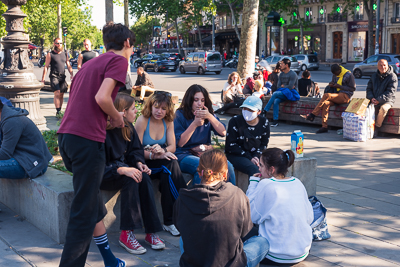
When Dr. Pat Zumhagen returned to the States from six months in Paris studying photography last year, she came back in one of the worst times of the Covid’s devastating effects. She had been hearing stories of how particularly hard-hit small businesses had been and how many were closing never to open again. Pat was especially alarmed that one of her favorite bars and literary institutions, the KGB Bar on the lower east side of Manhattan, might be among the casualties.
Pat had a long history with the KGB bar, which Denis Woychuk had founded in 1993 in a former Ukrainian Union Headquarters. She first became acquainted with Denis and the Bar when her son, Brian Zumhagen, had a book party there to celebrate one of his recent translations. From that point, Pat became a devotee and enjoyed musical and literary events with Denis, who was to become a close friend.
During these years, Pat taught at Teachers College/Columbia and most springs she taught a course entitled Cultural Perspectives: New York City Literature. Denis would visit the class, adding his ample knowledge of the literary scene in New York especially lower Manhattan and sharing his own place in promoting some of the best writers of today. They would also use as one of their texts for the class samples from the KGB Reader, five volumes of which had been published of works that had been read at the bar. Pat’s class, following The New Yorker magazine as a model, would write their own “New York” stories and were given a night at the KGB to read from their own literary creations, thus joining the ranks of the literary giants who had read there, often early in their careers.
At the point when Pat returned from Europe, says Lori Schwarz, KGB Program Coordinator, the Bar had gone from being closed completely for seven months to allowing 10 people inside and closing at midnight. By December, the ravages of the post-Thanksgiving surge of Covid had brought new restrictions of closing at 10 pm and they were expected to be closed down completely once again. No outside activities were possible, as the bar is on the second floor. The picture for sustaining the bar was bleak. So Pat was determined to find a way to support and hopefully save a place and people she cared deeply about. She proposed to Denis and Lori the idea of a Literary Homecoming Festival where early readers, many now famous, would return to read via Zoom, and the “audience” or attendees would pay a nominal fee to watch and listen (Adults $18 and children $12.00). Never has there been such a bargain! Pat offered to organize the entire event, reaching out to and procuring the writers, planning the dates, and co-hosting the event by orchestrating the “Q and A” from attendees and managing the conversation among the writers with the backdrop of the KGB Bar shining virtually behind her.
The thing that Pat says surprised and delighted her the most was the enthusiasm and readiness with which writers responded. “Yes, yes, yes! We’d love to return to the KGB Bar and read for this event! We LOVE the KGB Bar and have such fond memories of reading and attending others’ readings there!” Pat shared that Jennifer Egan, determined to help, agreed to fill in on December 2, despite a commitment, as outgoing president of Pen America, to attend the group’s year-end celebration and dinner held earlier that same evening! Egan came and read from her Pulitzer Prize-winning novel, A Visit From the Goon Squad.
Having attended most of these events in the moment, and now having listened to all of them multiple times, I can only say that it might have been called the KGB Homecoming FEAST, because that is what it is! Food for the soul, the in-person-event deprived, lovers of poetry, short stories, essays, and novels longing to revisit favorites as well as be introduced to new works.
With Lori co-hosting and expertly managing all the technological and marketing aspects, and Denis being on hand to welcome old friends, the Festival took shape and became a reality during the months of November and December, 2020.
The Homecoming Festival debuted on November 10, 2020, with three amazing writers, all of whom had read in the early days of the KGB bar and all of whom had appeared in the first literary collection edited by Ken Foster called the KGB Bar Reader. Helen Schulman, the kick-off reader of the Homecoming Festival and who had read in 1993, commented, “So thrilled to be part of this series at a great New York City literary institution!” Her sentiments were echoed time and again by all of the participants who remembered so fondly their days at the KGB Bar, which soon began to have readings almost every night highlighting various genres from poetry to short fiction and on weekends providing a venue for MFA Program students to try out their work.
Another reader on the opening night, Colum McCann, began by saying, “I actually feel like I’m in the KGB Bar, the way you enter up the stairs, smoke coming up from outside, a buzz coming from inside, and it’s packed, and there’s an energy in that space that is unrivaled by any other reading space I’ve ever been.” “What you have established is truly extraordinary,” McCann stated and said he was “willing to sign in from any place and time all over the world to keep the KGB going and the literary world it created.”
And so the series began! And I can say they were all truly, as Lori Schwarz once said, “magical.” But having been asked to write of a few highlights, here in no particular order, are some evenings that stood out for me.
Although many of the individual Q and A sessions brought some stimulating questions, one of the most truly captivating aspects of the Homecoming Festival was the conversation that occurred among the writers when the last writer had read. This dialogue among writers often about the how, when, and why of writing and its meaning in the world began on the very first night.
In response to a question about the structure of his most recent novel, Apeirogon, (2020) Colum McCann said, “Novelists are not as intelligent as people want them to be. A lot of the time I don’t know what the hell I’m doing, I’m operating on a wing and a prayer. Just hoping that I get the right note, like a musician. Content dictates form and its character and language that are important. You begin to see this container that you have created. and then the container begins to contain 100 stories, then 565 stories. . . and it is a kind of paying homage to 1001 Nights.”
Luc Sante, another reader that first night, quoted Louis Sullivan, the famous architect, that “form follows function.” “I began as poet, but I write in prose… but always potentially everything is flexible, it can go any which way, depending on the subject. Sometimes, it can be fun to plug yourself into a pre-existing form… But left to my own devices, I like to chop things up. I like to make contrasts, because I’m also thinking of film, of cutting away.”
Helen Schulman jumped in with “There’s a lot of math in my writing,” and for me— form girds me—so it helps me figure out how to process my ideas. Form gives me a kind of map. I don’t count pages but I weigh them. Readers often, although they may not know it, need the comfort of some kind of pattern, of repetition—I know it helps me to have some kind of musical pattern, and then I can fit things into form.”
“That’s beautiful, Helen, it’s all about that, finding the human music,” responded Colum. “A lot of writers are secret mathematicians or architects and may not know it. Weighing symmetry, emergence. . . It’s all about putting your finger on the music—the way the stuff sounds in the end. And that’s why a verbal reading series, like this one, is so important. It’s terrifying for an author, but also vivifying.”
In response to a question about how “difficulty and confusion” can operate in a work such as his current novel, McCann says, “The most important words we can say right now is ‘I don’t know.’ In this political climate, we are in a disease of certainty. [We need to] Embrace the messiness. This stuff is messy. We can get back to the original idea that we contain multitudes. How can we become so much more than one thing? Kaleidoscopic. I think we can do it through literature. We can scuff these things up. And at the fundamental core of all this, teachers and libraries and institutions like KGB keep this fuckin’ stuff alive.”
Pat closed out this first evening by saying that personally she “enjoyed every single minute,” a sentiment shared by me and everyone, I am sure.
Another night of engaging readings followed by thought provoking conversation occurred with Amity Gaige, Jason Brown, and Jonathan Franzen on November 17th. All three writers had also read at the KGB Bar in the first years of their careers, including Franzen’s reading from The Corrections, which became a #1 New York Times Bestseller. Behind the scenes, Pat confided, Franzen was very helpful in suggesting readers for the Festival and volunteering to come back on the spot to fill in when there was a fear of someone not being able to get there.
One of the definite highlights of the whole series was listening to Amity and Jonathan read together from her script taking on the voices of a husband and wife struggling with their marriage. As Amity had imagined, it worked beautifully to distinguish these characters with a different voice and made the story come even more alive.
One question that all three writers engaged with was the issue of veracity in their work and how important the research—journalistic and electronic searches—was to their writing. Jonathan remarked that “Truth is good. Writers are in the truth business—or should be. You’re really trying not to get things wrong.”
But the larger questions, of writing about experiences you have not had and how authentic one can be in recreating those experiences. For Amity, it means talking to people who have had those experiences and then trying to experience some measure of that reality. So setting a novel on a boat sailing around the world, when you’re not a sailor and never have been, she begins by speaking to those who have ventured on long sailing trips and then fictionalizing their actual experiences. She believes writing about things that are beyond her experience is a way to keep learning, an “excuse to expand my own life.”
Amity spent ten days aboard a boat in the Caribbean in heavy weather—”it was what I needed to write the book,” even if she wasn’t that happy to have that experience. “I’m afraid of sailing!” she confided. In some ways it was “madness” to set a novel on a boat.”
The very next night yielded another combination of writers who seemed to enjoy engaging with one another and gave the audience a lively, often joyful and thought-provoking evening. November 18th featured Sheila Kohler (first person to say “yes!” to Pat’s invite to participate in the Festival!), A.M. Homes, and Michael Cunningham (and a cameo by Johnny D, longtime legendary bartender at KGB, to introduce A.M. Homes). These readers were all published in the first KGB reader and read as far back as 1994. Interesting note: Cunningham’s initial story in that reader was “Mister Brother,” referenced during this Homecoming reading, by Denis Woychuk, who professed great love for that story. Cunningham responded by attempting locate a copy of the story as an add-on reading that night. Unfortunately, he was unable to locate a copy on the spot. As luck would have it, however, he agreed to allow us to publish it in the issue that you are reading right now! Check the lead fiction story!
After their individual readings, the conversation between Cunningham, Homes and Kohler moved to take up a very current topic of our times, “How do we/can we represent or tell the stories and experiences of “others,” whether that be the voice and thoughts of another gender, race, or generation?”
Sheila, recalling first what fond memories she had of reading at the KGB Bar and how electric the atmosphere was, read first there from her novel Cracks, published in 1999, which was turned into a movie, and was also included in the first volume of the KGB Reader. This night she read from a new novel called Open Secrets, which has a “crime thread” or mystery, as much of her writing does. The section she reads is of the thoughts and feelings of a fourteen-year-old named Pamela and this provokes a return to the conversation from the previous night about how one writes from another perspective—adolescence in this case “seemingly so authentically” as one attendee commented. “Well, I am interested in adolescence. And I remember it, maybe because I never really grew up. And I have adolescents in my life; I have grandchildren.” She also reads to her family to see how they respond to the adolescent voices she creates.
Michael Cunningham also talks about how he approaches writing about young people by thinking in terms of perceptions—how does THIS particular adolescent (for example 9-year-old Bobbi in his short story “White Angel”)—see the world? “I try to imagine the way this 9-year-old would imagine his world. The language comes from that.”
A.M. Holmes, in response to a similar question about imagining other’s experiences, remarks, “I’ve always been interested in shape shifting, the notion of psychologically how we evolve and how we inhabit others.” But, she reflects, “We are in a very particular moment right now where often people think they can only write about their own personal experience. That makes me very anxious.”
“Political correctness right now is to not attempt to inhabit the ‘other,’” she continued. But “trying on that which is unknown” is part of the creative and intellectual risk that she encourages her writing students at Princeton to take on—and more importantly, to risk failure. Homes feels, “If [they’re] not risking failing, then they’re not going to become the people they have the ability to be.” But often, if students have been successful and they’re at a university they worked very hard to get into, they become “risk adverse” and find it difficult to challenge themselves—to take creative and intellectual risks and “walk that tight rope because it can be terrifying.” If we’re only writing what we know, where is the challenge?
“Who has the right to what stories?” surfaces again when one attendee mentions the brouhaha surrounding the book American Dirt, about a Mexican mother trying to escape cartel violence and bring her young son to America. When publicity focused on the author, Jeanine Cummings, as a white woman with no direct connection to the refuge experience, there was criticism as to its authenticity and its use of “stereotypes, one-dimensional characters, and a white, American perspective.” Cunningham commented, “It crossed some lines that made some people uncomfortable. There are some lines—but where do we draw them? The first question I believe [writers should ask themselves is], “Do you feel /or to what degree do you feel you can enter the mind/body/soul/heart –of somebody not you? I feel there are characters very unlike me that I could write and some where I wouldn’t feel comfortable. I do not feel I could do that authentically. I could not put on their clothes—I have to be comfortable writing from that perspective. [It’s]Very loaded right now.”
A.M. Homes added, “Obviously, the imagination is wildly important, but we also have to make space for people who haven’t had a chance to tell their stories. And that’s a big piece of it. Allowing for those and the world of publishing [making space] for those who haven’t been represented yet.”
This issue was raised again in the memorable conversation thereafter dubbed as “the one that no one wanted to end” on December 3– women’s night– featuring writers Annie Lanzillotto, Ru Freeman, and Bernice McFadden. Issues of justice and literary representation were among the topics.
The last evening of the Festival featured Philip Gourevitch, Finn Yekplé and Joyce Carol Oates. Rebecca Donner, editor of the 2nd KGB Reader, On the Rocks, joined for this evening to introduce Gourevitch and Oates, who had stories published in that reader.
On this last night, Oates read from a piece she had written in April, 2020, during the early days of the pandemic and of quarantining. She describes a feeling of being “unmoored” from her usual procedures and routines and unable to “settle.” It is interesting that while many people felt the freedom from social engagements opened opportunities for perhaps creative and relaxing activities, many writers, used to being stationary and solitary, may have experienced this time differently. In her essay, “My Therapy Animal and Me,” Oates mentions the writings of Thoreau and Pascal and their proclamations about living outside of civilization as perhaps ultimately generative, but Oates feels that these are “fantasies a lot of us might have had, but when we actually have the experiences of driving life into a corner, the reality might be quite different.” She says, “Almost no one I know, no poet or writer, none of us—has felt this has been generating or a fertile experience. If anything, we write less and like what we do write less.”
Sylvia Foley, audience member and a writer who had read with Ken Foster and Colm Toibin on an earlier evening, responded in the Chat space:
Thank you too for speaking to the difficulty of writing/making art during pandemic times, how writing (the very lifeblood) suddenly doesn’t seem to have a place, or maybe it’s that one needs to completely retake its ground . . .
Anyway, thanks for your truth-telling.
What tales and stories and musings might come after this Pandemic subsides we can only at this time imagine. Maybe there are generative thoughts percolating just below the surface that will be nurtured when the anxiety and fear begin to leave us. I think of the cicadas about to emerge after 17 years underground. Who knows how they have been developing? But hopefully we won’t have to wait that long for these wonderful writers to draw from these experiences.
No stranger to writing on adversity, New Yorker Magazine contributor Phillip Gourevitch, known for his prizewinning coverage of the genocide in Rwanda and its aftermath, ended this evening and the series with a short story, stimulating yet another memorable post-reading conversation among writers and attendees. This one addressed the interrelationship of fiction and non-fiction and the ways fictionalizing can even be an aid to a reporter by prompting an examination of his own personal responses to an unexperienced situation, and fostering an emotional connection with subjects and their conditions. An amazing end to a rich literary experience at the KGB.
And on a last personal note, it was wonderful to see Finn Yekplé reading on the last evening, the youngest of the Festival readers at 17, but one who too made his debut at KGB Bar many years ago at the tender age of perhaps nine. Finn addressed the question put to him, “When did you decide to become a writer?” with a wry smile and said he didn’t think he’d “decided that” but raised a question many have struggled with. What does it mean to be a writer? If it’s someone who’s shared in any forum their creative thoughts and spirits and contributed to our way of imagining and interrogating the world, then indeed, yes, Finn, you are a writer.
-
Issue 12 Curators of KGB
INTRO: A re-launch featuring current and former curators; intended to stoke inspiration from the past and exhibit commitment to the future of the literary community that’s developed within the walls at 85 East 4th Street. It will be organized by genre then chronological order of each contributor’s timeline in programming.
Non-FictionFound Object – by Rebecca Donner-Former Litmag program coordinatorWhat Everyone Gets Wrong About ‘70s New York – by Mark Jacobson-KGB Bar Radio Hour and Non-Fiction programmingA MAGA Meltdown: How My White Family is Letting me Down in the Age of Trump – by Christian Felix-Co-host of We Don’t Even Know PodcastBefore – Alex Vara-TNS After-hours; The New School MFA Creative Writing Program Monthly ReadingPoetryA Good Week for a Birthday – by David Lehman-Monday Night Poetry co-founderUrinals – by Matthew Yeager-Monday Night Poetry CuratorThe Last Mirror – by Jason Schneiderman-Monday Night Poetry CuratorThree Poems – by John Deming-Monday Night Poetry CuratorWatching “The Color Purple” During Quarantine – by Jada Gordon-Monday Night Poetry CuratorUnraveling – by Olena Jennings-Poets of QueensPoem – by Akeem K. Duncan-Art in the Red Room with Quiet Lunch MagazineIt’s Taxing, isn’t it – by Leah Umansky-Couplet Quarterly Poetry Reading and SocialScience FictionThe Writing’s On the Wall – Matt Kressel-Fantastic FictionFictionThe Cry – by William Electric Black-Theater DevelopmentOvercoat Guy – by Paul Beckman-F Bomb Flash FictionFunhouse– by Shanna McNair-The Writers Hotel, introduction by Rick MoodyWhen the Staleys Came to Visit – by Rachel Aydt-Crystal Radio SessionsThe Frenchman – by Gessy Alvarez-Digging Through The Fat -
Letters from Swann In Love Again in the Lesbian Arabian Nights (1992)
April 27, 1994
Dear S,
When I was fourteen I had a pet catapillar that I took everywhere, it sitting on my shoulder. I watched over it for months making sure it was ok, feeding and watering it. One day it climbed into a glass of water and swam. I was pleased to learn it liked being in the water. In a tall glass. It left a thin skin see-through like a squid. For months it was a catapillar sitting on my shirt then it turned into a beautiful butterfly. A yellow monarch—it flew around. I had it cupped in my hands while walking outside where there was green grass and a little sidewalk. The butterfly flew out of my hands and landed with other butterflies on the grass. There were blue pink yellow and green butterflies like a cluster of rhododendrons floating in the air. A thousand small pansy-like butterflies flew around me. A man came along and picked a bunch of butterflies off of the green grass. I said: give back my butterfly. He said how do we know which one is yours? I answered him with a kick to his throat under his jaw at which he fell back dropping all of the butterflies. They flew up into a treetop.
Love, S
*
Dear Solveig,
I have to concentrate on staying in the present. Right now. The importance of making earnest drawings. Though funny things are happening nowadays, too. I hope your work in Germany is going well. I am inside a house that is heated by a small wood stove. Behind my head is a picture window as well as to my left. Outside is a lake three feet away from here. Lake Bottom in the countryside. It is night now so everything is black shadows and stars so far away. Everything is quiet. When I think of the outhouse, I feel like the opposite of a Beverly Hillbilly. Heather Locklear’s new season is starting tonight, and I left my TV with friends. I had a dream that Heather and I kissed and fucked. I had a dream about Lake Bottom last week, which was why I took my friends offer to stay here. I also miss watching the Canadian TV show about a vampire who has become a police detective to repay his debt to society. Lesbian vampires, pagans, and other witchy women make appearances on that show.
Green rhododendrons dry next to the floor lamp, next to an icon with ornate decoration surrounding Mary. An abstract painting in yellow and white, joyful colors, is on another wall. Behind me is a painted photograph from the thirties. Lulu the cat runs down the Dogon ritual stairs that lead to the loft bed. I got my first phone call here, from Cypress in Ohio. Cypress is a student of Chinese medicine which includes the study of herbs. I asked her about making Echinacea tinctures. Echinacea grows in the garden here. Aunt Violet said she planted Echinacea because the deer do not eat the purple cone flower.
Cypress asked if I have seen any deer. I haven’t, but I did hear a big sound from outside. So I locked the door which made that farm dyke Cypress laugh. I told her, What if a deer walked on two feet, wore clothes, came up to the door and started speaking in English? What would I do?
Cypress laughed again, then read to me from Susun Weed’s book, “You do not have to wash the plant except to wash the soil off of the roots. It takes six weeks to soak the plant in 100% proof vodka.”
Absolut Echinacea.
I heard another sound outside and remembered last week when I was first here at a party, someone took a flashlight to the overhanging section of the roof to reveal a tiny sleeping bat, hanging upside down. I don’t have to be afraid of a little bat.
I see pictures sometimes like a screen over my vision. I can tell it’s just a picture over what I physically see in front of me. Once in a while, I’ll see a picture of a box of Good & Plenty, the licorice candy, when something nice is happening.
Yours truly, Swann
*
Dear Solveig,
It’s now a week after I’ve arrived. Something has shifted. I feel more at home outside at night. I went outside to look up at the stars. The beauty in front of me has seeped in. I’ve become more porous, less of an atmosphere unto myself. On the porch, flying by me in the doorway then towards the light, was a Luna moth, one of those supernatural creatures, with wings as big as my hands. Then a flat bat creature flew by too, perhaps to say hello. I shivered, a little scared.
Aunt Violet mentioned that she thought this was not the kind of Echinacea with healing properties. A flower was in front of me while I looked it up in the botanical encyclopedia which said it is the healing kind, red-purple petals and a porcupine center.
Last night I went to the city to pick up some mail. I stopped by a tattoo show at the Drawing Center and ran into Richard who mentioned that someone else noted that he and I look like brother and sister. His theory is that we had a past life together as children in a harem with different mothers. Then I saw my ex Alice with a butch dyke who later gave me her card that had two different names next to two different cities.
I ran into Billy and pushed him into the ladies room and then up against a wall, he cried ‘help’ but all the women ignored him. I said, You’re free to go. He said, I don’t really want to go. He said he’d heard I play a mean electric guitar. Fran was dressed the same as usual. Fran’s look is neat, with an 80s emotional distance. I ran into Helen of the Deadly Nightshades. She looked glamorous with sunglasses. James is silver. I met up with my ex band member Irena. Now she’s in Crackersnatch. Snatch is a nice word as is purse and Lora is starting a zine called Fairies Suitcase.
Driving back to the countryside I felt joy at the solitude ahead. Back to the country. Mary Daly said, “I’m here to put cunt back into the country.”
Solvieg, I’m not used to living out an old Bowie song. Is anyone awake now to call at one a.m. with no long distance? I look across the lake above the trees and see a search light funneling over the tree tops as if from a vantage point in the sky and the crickets seem orchestrated to sound like electronic machines like a spaceship. I run back inside quite nervous and not interested in finding out what it really is. No Lulu the cat you cannot go outside now! I am truly scared. It is one am Sunday night. It’s a spotlight, but for what? Is the spotlight from a helicopter that searches for a murderer? I thought about whether or not I believe in UFOs. Had already dismissed it. Other times, I really believe they exist. Yet other times I think that it’s other people who kidnap and abuse the abducted. But at this moment I do not want to find out. I’m too frightened to go outside. I will assume it is a private airplane, something I’ve never seen at night. The lake acoustics breaks up the sound in a new way. It’s a good sign that the cat is not scared. Though perhaps the aliens have a way of calling cats to happily go outside.
The next morning, I phoned Violet and found out there is an airplane landing strip a few miles away from Lake Bottom. Wish you were here.
Love, Swann
*
Dear Solvieg,
I walked in the door of my apartment building away from the noise and heat of the avenue. I inhaled the calm and cool air, with the cooler floors and walls, a refreshed feeling that made me feel you around me, my desire soothed by these moments.
This morning, Lulu and I were sleeping in the front room with sheer pink curtains that veiled the fire escape and sky. Lulu jumped at a bird that stood on the fire escape and cast a shadow on the curtain. She smashed into the window and pulled the curtain down to the floor. She dove into the curtain a few times until she noticed the bird was still outside. She gave up, sat on top of the pile of curtains, and looked amused.
North 11th Street has a special nature view of that comet every time the sky is clear at dusk.
I miss you and your perfect behind. I look forward to your return when I will kiss every one of your long fingertips and everywhere else.
Love as Always, Swann
*
Dear Solveig,
Faye was outside in the woodshed, an open shed with spiderwebs and bees. This was her lion’s lair. Now back in the city she hides in the wooden shelves; it fulfills a primitive desire in her. I wait for the rain that’s you to wet my lips and sooth my heart.
Meanwhile, back in the city, South Asian music played on the radio all weekend. Some good Bangladesh wild happy chanting is on now. I’m taping it. Mateo had his birthday party in a city garden with plum, fig, and pecan trees. I was surprised.
We talk about people who’ve died. Someone young died of food poisoning. I have started to understand reincarnation lately. If I might live again I can relax a little, not feel so much pressure if I don’t get things done. Last night I dreamt about a kid who had several nipples like a cat. The next day on Billy’s roof, I met the kid from my dream. She was in a baby pool. She conjured two gray doves that landed next to the pool and walked towards her. The most inspiring thing was how certain she was that she’d been reincarnated and that we are so lucky to be here, alive. Also, she said that we were both witches in many of our past lives.
Ellen told me about an old man, an artist, who almost died. He stepped out of the fabric of existence where all these souls were pressed against the fabric longing to be born. The souls like all the sexiness going on.
The other day at dusk on Billy’s roof, I noticed a firefly. I love fireflies. They glow in the dark. I addressed that firefly as it flew and lingered in front of my face. Billy said it’s responding to your love. Allen Watts was on the radio later talking about rapports with insects, who respond to feelings around them.
The next day I was in Billy’s shop. A young woman tried on a sheer white dress with red flowers printed on three levels. She needed it for a performance, where she planned to wear a beebeard. What’s a beebeard we asked. She told us it’s when you put a queen bee on your neck and the rest of the bees surround the queen and form a bee beard. That night I was at Ned’s restaurant when he told me Nan had lice. He had to use a special comb to get the eggs out. He looked haggard when telling me this.
In my dream last night a skeleton hugged me from behind.
I got up realizing that I didn’t shut the screen on the window, so all kinds of creatures had flew in. A rabbit, a turtle, two gray doves, beetles, flies, a miniature poodle named Lambchop, and a blue and gold butterfly named Ava. But no signs of you. When will you come home?
Love Always, Swann
-

Little Dalmatia
I heard some girls say that God was absent from our town. All the girls at the all-girls Catholic school had experienced something that fell under the nuance of rape. If a girl at the all-girls Catholic school experienced rape, they were to fill out paperwork in the counseling office and file it in the main office. When Abigail had sexual violence done to her by Jude Thomas from the all-boys Catholic school, she filled out paperwork in the counseling office and filed it in the main office. Now what? asked Abigail. That’s about it we said. So Abigail started drugging Jude Thomas. She crushed up her birth control pills and mixed them into his protein powder before water polo. All semester Jude Thomas took birth control. Jude Thomas grew irritable and sensitive and sprouted breast buds and listened to Lana Del Rey. Now he understands what it’s like, said Abigail, to be a girl. Abigail was sent away to a Swiss boarding school. Jude Thomas got a full ride to Penn State for water polo. This all happened in the absence of God.I snuck a Croatian boy home with me. My dad caught us undressing in the pool house and chased the boy down the driveway with a hunting rifle. Fucking Croom kid he called after him. My dad couldn’t run further. If you touch her again I’ll put a hole in your head. He hurt his knee in the navy. The knee had a plate in it that set off the metal detectors at airports.
San Pedro was the largest diaspora of Croatian immigrants in the country. Colloquially, that four miles of shoreline was called Little Dalmatia. We had pejorative terms for them; Crooms–referring to when Croatia was part of greater Yugoslavia. But the slurs only betrayed a deep understanding of Slavic culture. The Croatians worked in the harbor and lived in row homes and used tap water tainted by runoff from the oil refinery. The Longshoremen’s wives packed them seafood pastas they’d eat between loading and unloading the cargo ships.
I lived a mile up the hill in Palos Verdes overlooking the harbor. Verdes is Spanish — the language the gardeners spoke — for green — the color they kept the lawns. All of the smog that settled over Little Dalmatia dissipated up the hill. We had a golf course and a tennis court and an equestrian center and a Catholic church and a Lutheran church and a Protestant church and an Episcopalian church and an Equinox. Our tap water was filtered.
I knew that God was absent from our town when the Reverend quit. There were rumors that the Reverend quit after Ben Sharlack from the all-boys Catholic school went to confession. The ladies who play Canasta in the back room saw Ben Sharlack leave a note in the confessional and the next day, the Reverend transferred to another parish.
I snuck out of my bedroom window and walked a mile down the hill to meet the Croatian boy. I apologized on behalf of my dad, and he shrugged like these things happen and rolled me a cigarette. His hands had grease on them from fixing his bike chain. We snuck into a shipping crate in the harbor, and I coaxed his hand under my uniform skirt. He asked me why, if I had so much money, did I look like a starving orphan? Outside we watched smoke plumes ripple off the oil refinery as giant machines distilled asphalt and petroleum.
Teach me some Croatian I said.
He thought. Loša mala bogatašica.
Loša mala bogatašica.
Yes.
What’s it mean?
Bad little rich girl.
A tenth-grade girl went missing after school. She never showed up to softball practice. The team waited and waited. She never showed up to cello or Shakespeare Club or Youth Government. The neighborhood held a vigil. There were stories that she’d been kidnapped by the Croatians and was being held for ransom. We waited for her finger to show up in her parent’s mailbox. Still wearing her mood ring; milky pink and indigo swirls. Pink = scared. Indigo = hungry. All of our mood rings were indigo. We were all chinese-gymnast-skinny. It turned out that the tenth-grade girl had run away with her dad’s business partner. Her parents didn’t get her finger in their mailbox. They got a postcard from Crete. Her fingers were all left intact, in fact, they had a French manicure.
A snooping Sunday School girl found Ben Scharlack’s confession and posted it on Instagram. This is what it said:
Forgive me father for I have sinned. That’s how you kick these things off, right? I cheated on the AP stats final. I stole a pack of gum from the Minimart. But what I most want to confess, Reverend, is that your son gives me head every Wednesday morning in the church parking lot. I’m pretty hard on him in school and for that I am sorry because every Wednesday morning while he’s sucking me off and looking up at me with those big blue eyes, I think about how much he means to me.
After my mom left, my dad bagged up her clothes and donated them to the Catholic church. He started dating the down-syndrome girl’s mom. He paid for her to have her breasts done. I invited the down-syndrome girl to a sleepover but she declined. She said she didn’t want to be my sister. She ignored me at Mass while our parents held hands in the pew.
A Columbian exchange student transferred to our school. We invited her to a sleepover. At the sleepover the girls told secrets and we asked the Columbian girl to tell us a secret and she did. She told us that once she hit a hitchhiker while she was driving on a dark road in Columbia. It all happened so fast that she just kept driving and never told a soul until she came to America to attend our high school and told us at the sleepover. That was the best secret we’d heard in a while. We told her she’d be fine here because, for the most part, God was absent from our town. When the girls went to sleep, I snuck back out to meet the Croatian boy whose hands were perennially slick with bike grease. I laid in his arms and told him about Abigail and Jude Thomas and the Columbian exchange student who’d committed vehicular manslaughter and the missing tenth grader who wasn’t missing at all. Loša mala bogatašica, he whispered.
I walked home early Wednesday morning through the church parking lot. Ben Sharlack was leaning against the wall with his hands in his pockets and looking into the distance.
What are you waiting for? I asked.
He shrugged like he didn’t really know.
I ironed my skirt while my dad read the paper. I dabbed at the grease stains, and he glanced up and said what’s that from? I said I must have sat in something at the horse stables and for a moment he knew. He knew I hadn’t sat in anything at the horse stables. I could almost see him limp the mile down the hill to the harbor. I could see myself chasing after him in my bike shorts crying daddy no! until he found the Croatian boy and I could see my dad shooting him in the head with the hunting rifle in Little Dalmatia while the longshoremen ate their pasta and the oil refinery distilled petroleum. But instead he just said be more careful. Those skirts are expensive.